
当サイトはアフィリエイト広告を利用しています。

英語の indifferent は、TOEICや英語ニュースなどでもよく登場する単語です。
辞書では「無関心な」と訳されるけれど、なぜ different(異なった)が入っているのでしょう?
in- が語の頭に付くと、よく反対の意味になるのに、indifferent は「異なっていない」とはなりません。
【この記事で分かること】
- indifferent の意味と語源
- ネイティブが感じるニュアンス
- uninterestedとの違い
- indifferent to の使い方
- TOEIC頻出例文
これらを、分かりやすく深掘りして解説します。TOEIC・英検の試験対策にも役立ちますよ。
- indifferent の意味とコアイメージ
- indifferent の使い方と例文
- ビジネスシーンでの注意点
- indifferent と類似表現の違い
- TOEIC対策|indifferent を覚えるコツ
- よくある質問(FAQ)
- まとめ
indifferent の意味とコアイメージ
indifferent の意味は、主に2つです。
- indifferent:
- 「無関心な」 メインの意味
- 「良くも悪くもない」
| 使用頻度 | ニュアンス | |
|---|---|---|
| 「無関心な・どうでもいい」 | 高(80%) | 最も一般的な用法。感情が動いていない・冷淡 |
| 「良くも悪くもない」 | 低(5%) | 実質「あまり良くない」ことを強調。古風・文語的 |
「無関心な」
- 特に、人の態度や反応を描写する際に使われる
- 関心がない・冷淡
- 興味がないため、どうでもいい
「良くも悪くもない」
- not very good「あまり良くない」「凡庸だ」という否定的な気持ち
- 期待外れ、印象に残らない
- 評価やレビューでよく使われる
indifferent:
なぜ indifferent は 「無関心」?


初めは different の反対の意味
調べてみると、indifferent は、14世紀後半に古フランス語の indifferent(公平な)から、あるいはラテン語の indifferentem(違いのない、重要でない、善でも悪でもない)から来たようです。
もともとは、「違いがない、区別しない」の意味だったわけですね。この意味では、確かに different の反対。
意味の変遷
「違いがない」 「好きでも嫌いでもない」「どちらか一方に偏らない」 「どうでもいい」のように広がって、15世紀初頭に「無関心な」になったそう。
「良くも悪くもない」が indifferent の基本概念ですが、17世紀以降は「むしろ悪い」のような傾向になりました。
indifferent の使い方と例文
「無関心な」 の意味
indifferent は「中立」ではなく「冷淡」なニュアンス
indifferent to は「~に対して無関心な」、indifferent about は「~について無関心な」。日常的には、to を使うほうが多いです。
| 意味 | ニュアンス | 使用頻度 | |
|---|---|---|---|
| indifferent to | 「~に対して無関心な」 | その対象自体に無関心 | 多い |
| indifferent about | 「~について無関心な」 | それを取り巻く物事に無関心 | 少ない |
- Sarah was absolutely indifferent to him.
(サラは彼に対して全く無関心だった) - She was utterly indifferent to his irritation.
(彼女は彼の苛立ちに全く無関心だった) - Many young people are indifferent about the plans.
(多くの若者は計画に無関心だ) - Despite the boos from the audience, the pianist remained indifferent and continued to play.
(観客の野次にもかかわらず、ピアニストは無関心で演奏を続けた) - It's very hard to teach a class full of indifferent students.
(無関心な生徒ばかりのクラスを教えるのは非常に難しい)

「どちらでもいい」 の例文
無関心ゆえの「どちらでもいい」です。
- She seemed indifferent about whether the meeting was canceled or not.
(彼女は会議が中止になるかどうかどうでもよさそうだった) - He was indifferent to the color of the car — as long as it ran, he didn’t care if it was neon pink or matte black.
(彼は車の色はどうでもよかった。走れば、ネオンピンクでもマットブラックでも気にしなかった) - It's indifferent which outfit you choose.
(どちらの服装を選んでも構わない)
indifferent to / about どちらを使う?
通常は、to でOK。多くの場面で置き換え可能ですが、傾向として使われる対象が少し違います。
「人や外部の刺激」 to
対象そのものに「心が動かない・影響されない・反応しない」。
- He’s indifferent to her.
(彼は彼女には関心がない) - She seemed completely indifferent to the criticism.
(彼女はその批判に全く無関心に見えた) - He’s indifferent to cold weather.
(彼は寒い天候に無関心だ) - The company was indifferent to customer complaints.
(会社は顧客の苦情に無関心だった)
「テーマ・問題・話題」 about
何かの問題・テーマに対して「興味がない」。
- She’s indifferent about politics.
(彼女は政治に関心がない) - I’m indifferent about where we eat tonight.
(今夜どこで食べるかについてはどうでもいい)</li - She’s indifferent about whether he comes or not.
(彼女は彼が来るかどうかはどうでもいい) - He seems indifferent about his future.
(彼は自分の将来について無関心に見えた)
「あまり良くない」 の意味
ネイティブは、日常会話でこの意味で使うことはあまりありません。フォーマルな批評(料理評論や芸術評)などが多いです。
- We didn't like the restaurant much ― the food was indifferent and the service rather slow.
(そのレストランがあまり好きではなかった。食べ物は凡庸でサービスはかなり遅かった) - The service at the restaurant was indifferent at best.
(レストランのサービスはせいぜい可もなく不可もなくだった) - She had starred in several very indifferent movies.
(彼女はいくつかのあまり良くない映画に主演した) - He suffered from indifferent health.
(彼はあまり健康状態が良くなかった) - Much of the food we eat is of very poor or indifferent quality.
(私たちが食べる食べ物の多くは非常に質が悪いかあまり良くないかだ)
good, bad, or indifferent
good, bad, or indifferent は「良いか悪いか、どちらでもないか」。意味合いとしては、「あまり良くも悪くもない」です。評価が特にない時の定番表現。
よく記事タイトルで、疑問を投げかける時などに使われます。
- good, bad, or indifferent:
- 「良いか悪いか、どちらでもないか」
- Tax Breaks for the Wealthy to Stimulate the Economy: Good, Bad, or Indifferent?
(経済を刺激するための富裕層への減税は、良いか悪いのかどちらでもないか?) - How are we feeling about tomorrow's exam ― good, bad, or indifferent?
(明日の試験についてどう感じているのか。良いか悪いかどちらでもないのか?) - No matter how good or bad or indifferent Foster is, he’ll always be my friend.
(フォスターがどんなに良い子でも悪い子でも、あるいはどちらでもなくても、彼はいつも友達だ)
ネイティブが代わりに使う表現
日常会話で「(質が)あまり良くない」「微妙」「パッとしない」と言いたい場合は、以下のような表現が一般的です。not very good が最も自然。
| 意味 | 例文 | |
|---|---|---|
| mediocre [mìːdióukər] | 「二流の、平凡な」 | The movie was just mediocre.(映画はただ平凡だった) |
| so-so | 「まあまあ」 | The movie was so-so.(映画はまあまあだった) |
| not very good | 「そんなに良くない」 | The movie wasn't very good.(映画はあまりよくなかった) |
ビジネスシーンでの注意点
I'm indifferent NG
基本的に、indifferent はビジネスシーンでは避けることをお勧めします。というのも、「無関心」「冷淡」「どうでもいい」といったネガティブなニュアンスが強いため。
ただ、相手との関係性や状況によっては可能です。
ビジネスシーンの例文
- The client seemed indifferent to the proposed timeline.
(クライアントは提案されたスケジュールに無関心のようだった) - Management is indifferent to which vendor we choose.
(経営陣はどのベンダーを選ぶかに特にこだわらない) - Our customers are no longer indifferent to sustainability.
(我々の顧客はもはや持続可能性に無関心ではない) - If the team is indifferent about the design options, let's move forward with the simplest one.
(チームがデザインオプションにこだわりがなければ、一番シンプルなもので進めよう)
indifferent に代わる表現
「どちらでも構わない(こだわりがない)」と言いたい時に "I'm indifferent." と言うと、「(興味がないから)どうでもいい」と突き放した印象になります。
代わりの表現を使うほうが安全。
代替表現
- I have no preference.
(特に好みはありません) - Either one is fine with me.
(どちらでも大丈夫です) - I'm open to either option.
(どちらの選択肢でも構いません)
indifferent と類似表現の違い
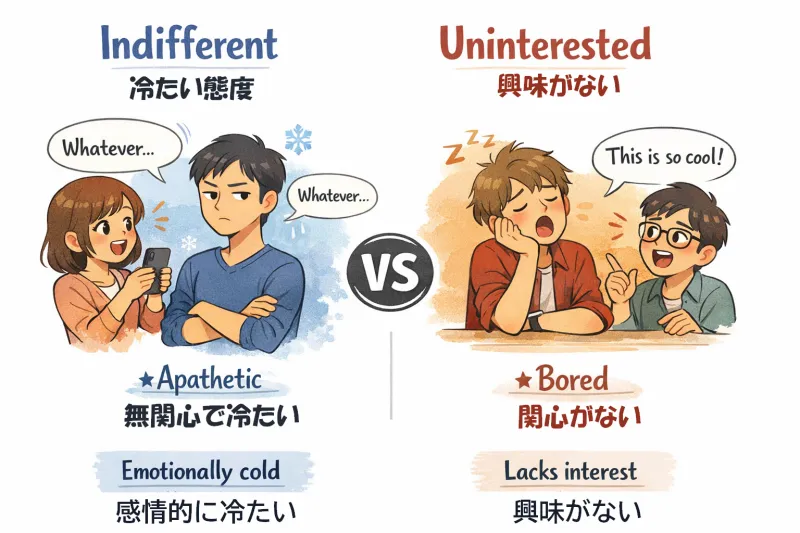
indifferent と似たような意味を持つ単語はいくつかあるものの、それぞれニュアンスが異なります。indifferent のほうが、冷たい印象。
| 意味 | ニュアンス | ビジネスでの使用 | |
|---|---|---|---|
| indifferent | 「どうでもいい」 | 態度の冷たさ | 一応可 |
| uninterested | 「興味がない」 | ややネガティブに響く | 不可寄り |
| apathetic | 「無感動な・無気力な・無関心な」 | 無気力・情熱や感情が欠如 | 不可 |
| disinterested | 「公平な・私欲がない」 | 利害関係がなく中立的 | 可 |
| don't care | 「気にしていない・どうでもいい」 | カジュアル。時に失礼 | 上司には不可 |
| unconcerned | 「心配していない」 | 落ち着いている・穏やか | 可 |
uninterested との違い
ビジネスでは「やる気がない」と受け取られやすいので、使わないほうがよいです。
- 「興味が湧かない」「関心が持てない」
- indifferent より「興味の欠如」が明確
- not interested のほうが自然で柔らかい
- I'm uninterested in history, so I found the documentary boring.
(私は歴史に興味がないので、そのドキュメンタリーは退屈だった) - He seemed uninterested in the proposal.
(彼はその提案に興味がなさそうだった) - They were totally uninterested in politics.
(彼らは政治に全く興味がなかった) - She was completely uninterested in her sister’s career.
(彼女は妹の職業に全く興味がなかった) - Older workers are generally uninterested in computers.
(高齢労働者は一般的にコンピューターに興味がない)
uninterested:
apathetic との違い
組織の士気の低下や「燃え尽き症候群」などの文脈で使われます。ビジネスでの使用は非推奨。
- 「どうでもいい」「関わりたくない」「無反応」
- indifferent よりはるかに重い
- 感情的にシャットダウンしているイメージ
- After years of illness, he became completely apathetic about life.
(長年の闘病生活で彼はすっかり人生に対して無気力になった) - The team has become apathetic after months of unclear direction.
(不明確な方向性が数か月続き、チームは無気力になった) - Don't be so apathetic ― how are you going to get a job if you don't even start looking?
(そんなに無気力になるな。仕事を探し始めなければ、どうやって仕事を得る?) - She felt too apathetic even to move.
(彼女は動くことさえできないほど無気力になった) - How can you be so apathetic about the world and its problems?
(どうして世界とその問題に対してそんなに無関心でいられるの?)
apathetic:
disinterested との違い
本来は、「利害関係がなく、公平・中立な立場」を示します。
disinterested が indifferent と同じ「無関心な」の意味で使われることも多いです。ただし、フォーマルな文脈では誤用とされたりするので注意が必要。
- Her advice appeared to be disinterested.
(彼女の助言は利害関係のないもののように見えた) - I was merely a disinterested spectator in the whole affair.
(私はその件全体において単なる中立の傍観者だった) - A lawyer should provide disinterested advice.
(弁護士は公平なアドバイスを提供すべきだ) - The decision was made by a disinterested party.
(その決定は利害関係のない第三者によって行われた) - He was totally disinterested in cars or girls.
(彼は車や女の子にまったく興味がなかった)
don’t care との違い
- 「気にしない」「どうでもいい」
- 口語的で感情的に響きやすい
- 状況によっては、ぶっきらぼうだったり、突き放すような「失礼」な印象
- I don’t care what they think.
(彼らがどう思おうと気にしない) - I don’t care where we eat.
(どこで食べてもいいよ) - She's never cared very much about her appearance.
(彼女は自分の外見をあまり気にしたことがなかった) - I don't care how much it costs, just buy it.
(値段はいくらでも構わない、とにかく買って) - "Mike's really fed up about it." "I couldn't care less."
(「マイクは本当にうんざりしてる」「どうでもいいよ」)
unconcerned との違い
- 「心配していない・気に病んでいない・問題視していない」
- 問題・状況に対して「気にしていない」という落ち着き
- He seemed unconcerned about the delay.
(彼は遅れについては気にしていないようだった) - She remained unconcerned despite the rumors.
(彼女は噂にもかかわらず気に病んでいなかった) - The manager seemed unconcerned about the budget issue.
(マネージャーは予算の問題について心配していないようだった)
indifferent / unconcerned の比較例文
新製品の反応
- Customers were unconcerned about the new product.
- Customers were indifferent to the new product.
(顧客は新製品に無関心だった)
unconcerned だと「新製品を心配していない」という意味になり不自然
プロジェクトの遅れ
- The manager was indifferent to the delay.
- The manager was unconcerned about the delay.
(マネージャーは遅延については気にしていなかった)
indifferent は、遅れに対して「冷淡」で奇妙に聞こえる
TOEIC対策|indifferent を覚えるコツ
TOEICでの罠ポイント3つ
- different と見間違える
スペルが似ているため、Part 5 での罠としてよく使われる - don’t care のような強い口語表現とは違う
TOEICはフォーマル寄りなので、don’t care はほぼ出ない - disinterested と混同しない
TOEICでは disinterested = impartial(公平な)の意味で出ることが多い
indifferent の覚え方
語彙単体より、セットで覚えると圧倒的に強いです。
- indifferent to =「〜に無関心」
- indifferent about =「〜について無関心」
- remain indifferent =「無関心のままでいる」
- appear indifferent =「無関心に見える」
TOEIC式の練習問題
 問題 1.
問題 1.
"Despite the marketing team’s efforts, many customers remained ______ to the new campaign."
- A.enthusiastic
- B.indifferent
- C.aware
- D.committed
答え
【答え】B. indifferent
問題 2.
"The survey revealed that employees were largely ______ to the proposed schedule changes."
- A.indifferent
- B.efficient
- C.temporary
- D.predictable
答え
【答え】A. indifferent
問題 3.
"Despite the detailed presentation, the client seemed ______ to the additional service options."
- A.uninterested
- B.indifferent
- C.aware
- D.capable
答え
【答え】B.indifferent
どちらでも「どちらでもよい」というニュアンスが自然。uninterested だと「興味ゼロで拒否的」に聞こえ、営業文脈では強すぎる。前置詞も uninterested なら in。
問題 4.
"The supervisor warned that appearing ______ in meetings could be interpreted as a lack of motivation."
- A.indifferent
- B.uninterested
- C.reliable
- D.accurate
答え
【答え】B.uninterested
「やる気がないと解釈される」なので、uninterested が適切。indifferent は「どちらでもいい」で、この意味では弱い。
問題 5.
"The committee is ______ to the location of the next workshop, as long as it is accessible."
- A.indifferent
- B.hesitant
- C.uninterested
- D.optimistic
答え
【答え】A.indifferent
「どこでも構わない」は indifferent。uninterested は「興味がない」になり不自然。
よくある質問(FAQ)
「indifferent」の最も一般的な意味は何?

「無関心な」「冷淡な」です。特に、indifferent to (〜に無関心な) の形で使われます。この意味での使用頻度が最も高いです
「indifferent」の反対語は何?
文脈によりますが、interested(関心がある)、concerned(心配している)、passionate(情熱的な)、eager(熱心な)、enthusiastic(熱心な)が反対語として使えます
「indifferent」と「uninterested」の違いは何?
uninterested は「興味がない」という感情の欠如、indifferent は「どうでもいい」という態度の冷淡さや中立性を表します。indifferent は「冷たい」というネガティブなニュアンスが強いです
「indifferent」はどんな場面でよく使われる?
対象に対して肯定も否定もせず、興味・感情が薄い状況に使われます。「無関心な態度」のように、どんな態度や気持ちなのかも示せます
「indifferent」はTOEICや英検で出題される?
はい、特にTOEICでは、類義語との使い分けや、indifferent to という形で頻出します。英検では準1級レベルの語彙として重要です
【次の記事】sensible と sensitive の使い分け
まとめ
【indifferent の意味】
- 無関心な、興味がない、どうでもいい
- 良くも悪くもない
特によく使われるのは、be indifferent to の形。また、uninterested、apathetic などの類義語との違いも覚えておくと、英語の理解が深まります。
TOEICや英検に臨む場合、体系的な語彙力強化が必須です。新聞は内容的にもTOEICと相性がよく、多くの単語を吸収できますよ。
語彙力強化のために
英語の語彙力・読解力を同時に伸ばすなら、『The Japan Times Alpha』や『Asahi Weekly』のような英字新聞が効果的。
従来の「読む」はもちろん、「書く」練習もあり、WEBサイトで英語音声を「聴く」も可能です。
The Japan Times Alpha(ジャパンタイムズアルファ)

日本語の対訳や注釈付きなので、辞書なしで読めます。初心者にも優しい。
英文ライティングなど学習要素が強く、新聞と言うより、初級者から上級者まで対象にした英語教材といった感じ。
発行は週刊で、1週間分の学習としてはちょうどよい分量です。

こちらも、和訳や日本語注釈付き。英作文や英文法など学習コラムが充実してます。
読みやすさを重視して、英語学習者を飽きさせないための工夫が上手い。ニュース記事の濃さは、さすがメジャーな新聞出版社。
少しでも理解の助けになれたら幸いです。お読みいただき、ありがとうございました。
(引用・参照元:The Free Dictionary, Oxford Learner's Dictionaries, Cambridge Dictionary, Online Etymology Dictionary, LDOCE, Collins Dictionaries)
